|
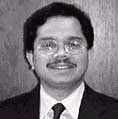
Chennai: On his first day at a General Motors plant near 'motor city' Detroit, Michigan, in the US, 17-year-old rookie worker Chandran Kymal - now better known as Chad Kymal, chairman and CEO of Omnex Inc - accidentally stepped into an oil can. "My father had just bought me a new pair of shoes that would look suitable for an automobile plant," he recalls. "I don't know how I put my leg into that oil. At the time, I was a student at the General Motors Institute, where students were alternated between the classroom and the shop floor every 12 weeks."
Perhaps the incident helped this Chennai lad get a firm hold of shop floor activities and later go on to advise global automobile vehicle manufacturers like the Ford Motor Company, component suppliers and other industries on quality systems. Many years ago, his father, K P C Nair, a professor in the Chennai veterinary college, got an assignment in the US and took his family along. Young Kymal was then studying in the MCC High School. As happens to many other Indian names in America, Chandran was soon corrupted to Chad. That's the name he now prefers, reasoning, "It has its own brand equity." After completing his bachelor's degree in mechanical engineering, Kymal went on to do his master's in Industrial and Operations Engineering, followed by an MBA at the University of Michigan. "I joined KPMG. After some time, clients started asking for me specifically. That gave me the confidence to start my own consultancy," he recounts. At 28, soon after his marriage to Ajitha, a chemical engineer, Kymal promoted Omnex, a consultancy organisation. Now a $50-million company, Omnex operates in 18 countries and has 400 employees on its rolls. The company offers consultancy and training courses for large corporate houses on lean and Six Sigma initiatives for industries like automobiles, healthcare, semi-conductors, telecom, aerospace, transportation, construction and environmental engineering. Sister company Omnex Systems provides software solutions. Omnex's growth has come essentially because of its association with the Ford Motor Company and its vendors. Kymal helped the auto major rewrite its 'quality operating system (QOS)' methodology and was instrumental in formulating the its QS-9000 requirements. "We were making around $80,000 per week in training and consulting," he remembers. When Ford Motor drew up its 'emerging markets strategy', Omnex declared that it would follow Ford Motor anywhere on earth. The first call came from Ford Brazil, followed by Thailand and India. Kymal is an examiner on the board of the prestigious Malcolm Baldrige National Quality Award - the most prestigious corporate award for US companies. He has also founded AQSR, one of the top five quality system registrars in the US, providing ISO 9001, QS 9000, TE Supplement, ISO/TS 16949, VDA six sigma, AS 9000 and ISO 14001 series auditing services. Today, Kymal can rightly take credit for effecting over $100 million in savings for US corporates, through six sigma consultancies. According to him, China and India are the two markets where Omnex is logging growth now. The Indian operations generate around $1 million. "Our software company is also doing well," he says. Indian companies, unlike American ones, demand customised software. "We are in the process of restructuring our software products, so that customisation becomes easy. This would make us more competitive in the US markets," he says. Followers of spiritual guru Ma Amritanandamayi, the Kymals have two children, Rohan and Megha. He has written two books, How to audit ISO:9001:2000 and ISO / TS 16949, An Implementation Guide. Kymal was in Chennai recently to release his second book in India. His third book is based on process auditing of ISO/TS 16949. "The fourth one will be about issues in integrating multiple standards," the 46-year-old Kymal says, sipping a tall glass of sweet lassi. Excerpts from an interview: A lot has been written about India emerging a global sourcing base for automobile companies. Is this for real or just hype? The Chinese passenger car market is around 5-million units per annum; and growing rapidly. Any auto company in the west would not like to miss out on the action in China, where the industry is intensely cost competitive. The fact is that China is their first preference. But I will guide people to India to look for component sourcing possibilities. My reasons are: first, it is easier to interact with Indians and understand them, unlike the Chinese - their language and culture makes it difficult for outsiders to do business with them with the same ease and flexibility. China does not have sufficient information technology (IT) infrastructure, unlike India, nor is it in a position to immediately catch up. Also, Indian companies understand quality process systems better, and are conversant with concepts like Six Sigma, total quality management (TQM), total productive maintenance (TPM), etc. The problem is that today, only big auto industry companies know India; others don't. Omnex consults and helps 'tier I' vendors and auto makers in identifying auto ancillaries. Do you have a mandate from any manufacturer to look out for suppliers in India? We are in the process of staffing that division. Apart from India, I will look at Thailand and China for outsourcing opportunities. Do you have any suggestions for the Indian auto component industry, which is avidly looking out for export opportunities? Indian component suppliers are better positioned as 'tier II' and 'tier III' suppliers, not as 'tier I' vendors, as the risks associated with a 'tier I' vendor are huge. Even a half-hour stoppage of the vehicle manufacturer's production lines owing to quality or delivery problems could involve a penalty of several million dollars; that could wipe out a vendor company. Now, vehicle manufacturers are passing on the cost of warranty claims and vehicle recalls to the component vendors. On the manufacturing side, even if the domestic industry is around one million cars, companies should acquire world class manufacturing capabilities. The management should have a global vision and leverage Indian skills. The subservient attitude of many middle level officials to the top brass is actually counterproductive. This attitude should change. Success comes only to a forward-looking management. Companies should adopt world class strategies and methodologies internally; the top management should understand and experience the US, European or the Japanese markets and adopt world class strategies for supply chain. Many Indian companies now figure in the Deming Medal list. Since you are one of the examiners for the Malcolm Baldrige award do you think this is indicative of Indian companies scaling the quality summit? It is good to note that Indian companies are winning the Deming Medal. But I would like to visit them and actually see their processes and products. In one company, I found the end products being checked several times before being shipped out. This cannot be done. Indian companies are aware of quality concepts. But what is lacking is the strict implementation of those concepts. For many, TPM and TQM are just fashionable words. On the brighter side, companies are conversant with the concepts, and therefore implementation will be easier. Your prediction for the Indian auto ancillaries? The future seems bright. Though most of the companies are family owned, the sons and daughters of the promoters are coming back with an overseas education. This is a good sign. However, industry will witness lots of mergers and acquisitions, once the global majors decide to set up their production bases here. Ancillaries with two or three plants are likely candidates for buyouts. American car manufacturers seem to figure more frequently in the case of vehicle recalls in the US, whereas the Japanese companies don't. Are the Japanese quality standards more stringent than American standards like the QS 9000? I used to wonder why vehicle recalls by American manufacturers hit newspaper headlines but not those of the Japanese car manufacturers. It is not that Japanese car companies don't figure in vehicle recalls. Perhaps, their public relations is much more effective or they do it silently. The ISO and TS standards have been merged to result in the ISO/TS 16949:2002. How is this superior to ISO, QS and the Toyota Production System (TPS)? ISO is not performance-oriented and does not look at new product developments, while TPS is more focussed on lean production systems. On the other hand ISO:TS 16949 has the customer as its focal point and is performance-oriented. It is comprehensive, and goes beyond TPS. The new standards also give importance to new product development.
|