General Motors to electrify car market in 2010 with the Chevrolet Volt
05 June 2008
General Moors (GM), the all-American automaker that founded its enviable reputation on gargantuan sports utility vehicles and fuel-guzzling street blazers, has now decided to go green. Yesterday, it announced ambitious plans to bring the concept electric hybrid car Chevrolet Volt to the consumer by 2010, even as it cut down on production of its usual repertoire of trucks and SUVs.
This change of heart is not entirely unexpected, considering the galloping prices of crude and similar plans announced by other auto giants. While Ford has also decided to reduce SUV and truck manufacture to concentrate on smaller vehicles, even a non-US major like Nissan has expressed its considerable interest in the electric vehicle segment. (See: Ford to step up small car production; stalls pickup and SUV production and Nissan aims for global electric vehicle leadership; first product due in 2010)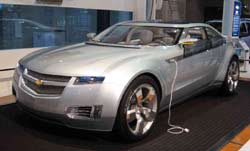 "The Chevy Volt is a go," GM CEO Rick Wagoner told reporters ahead of the company's annual meeting with shareholders in Wilmington, Delaware.
"What we're saying with this approval is that the GM management and board believe the technical goals of the Volt are not only achievable, but achievable generally within the time frame we previously outlined," Wagoner said.
This was quite in contrast to his earlier statements where he had said the 2010 timeline would be a "stretch" to meet since GM was rushing to do basic battery-development work at the same time that it engineered a new vehicle from the ground up.
Considering the declining sales numbers of its other products in the face of record oil prices, competition from names like Toyota and pressure from the government and environmentalists to improve fuel economy on its vehicles, this reassessment of priorities is understandable.
The plug-in vehicle, introduced as a concept car in January 2007, will be powered by a lithium-ion battery that can be recharged either via a regular electrical socket when parked or by an onboard generator while driving.
