Ford to dress new Escape and Mercury Mariner with eco-friendly soy cushion covers
21 August 2008
Ford wil introdue new soy- based foam seats on its Ford Escape and Mercury Mariner in 2009. These cushions are wrapped in 100 per cent recycled fabric, the first such seats in the automotive industry.
"As Ford continues to migrate soy-based foam seat inserts across many vehicle platforms, we're improving our environmental footprint by conserving limited resources and reducing carbon dioxide emissions," said Debbie Mielewski, technical leader, Ford Plastics Research.
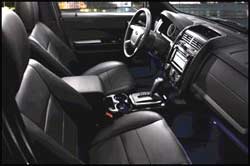 The Ford Mustang, F-150, Expedition and Lincoln Navigator also feature similar soy-based foam seat cushions.
Ford showcased its work with soy foams in 2003 on the Model U concept, which featured soy-based seat cushions as well as a soy-based resin composite tailgate.
Ford's Plastics Research team has now formulated the chemistry which replaces 40 percent of the standard petroleum-based polyol used in seating materials with a soy-derived material. This will make a significant impact on the environment while reducing dependency on imported petroleum.
According to the National Institute of Standards and Technology the impact of soy based products on the environment is reduced to one quarters of the petroleum based products. Most automakers today use, on an average 30 pounds of petroleum-based foam in seat backs, seat cushions, armrests, instrument panels and headliners.
