|
Mumbai: The phenomenal sales growth of carbonated soft drinks Pepsi (about 30 to 35 per cent) and Coca-Cola (40 per cent and above) in the months of April and May 2003 has proved that there is a right price for everything - you just have to get to it.
In fact, since PepsiCo and Coca-Cola, the two US-based companies, set up operations in India, never have they achieved the kind of sales growth with their carbonated soft drink (CSD) brands as they have in the past two months. The success is mostly due to a cutthroat price war initiated by Coca-Cola India when it launched Coke in 200-ml packs priced at Rs 5. Pepsi India was left with no choice but to follow suit. Not only this, Pepsi went one step further and slashed prices of its 300-ml packs to Rs 6 - all because it didn't have 200-ml bottles. The price war was, of course, augmented by some slick advertising, with Coke bringing in film star Aamir Khan in various regional guises to reinforce its price-led strategy. Pepsi, not to be outdone, roped in reigning queen Aishwarya Rai and current heartthrob Vivek Oberoi to do the honours.
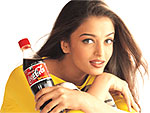
It has all paid off. For two companies, which in the past two years were unable to hasten the sales of soft drinks and which repeatedly requested the government to reduce the excise duty on these to help increase sales, have achieved an unprecedented sales growth with the very same soft drinks. In fact so great has been the sales growth of the soft drink brands that the companies now seem to be shelving its earlier plans to launch juices and other beverages in the domestic market. Sales of the two brands have outstripped the sales growth of juice drinks like Coke's Maaza and Pepsi's Slice. The two juice drinks were earlier said to be growing faster than CSDs. Pepsi India claims that while the sales of Pepsi grew by 25-30 per cent in April and are expected to register a 30-40-per cent growth in May, its other CSD brands, Mountain Dew and Blue Pepsi, have also done quite well. Though that can't be said of the company's lime-flavoured Pepsi Aha and juice brand Slice; they have performed below expectations.
Led by a riveting ad campaign, Mountain Dew has already grabbed a 5-per cent share of the Rs 7,000-crore carbonated soft drink industry since its launch. For the moment PepsiCo India is putting juice brand Slice under review. Originally launched in a mango flavour in returnable glass bottles, Slice was extended to cartons two years back. It has since then been introduced in flavours such as litchi and guava. Coca-Cola India also says it has logged spectacular sales in the past few months. It claims it has registered a sales growth of over 40 per cent overall during the last two months, while in a few urban pockets like New Delhi and Hyderabad the sales growth was as high as 70-80 per cent in the month of May. The company has also increased its village penetration from 9 per cent in year 2000 to 25 per cent in 2003 by adding 40,000 more villages. It has added 30 new lines from September 2002 and has added 9 million cases of new glass to its operations.
Compare this with the fact that it had about 20 million cases of glass in the market during the last 10 years. The total number of Coca-Cola outlets has increased from 6,00,000 to 7,50,000 from 2000 and the company is giving out additional 2.5 lakh refrigerators this year. Coca-Cola is also said to be putting its plans of launching juice and milk-based beverages on the back burner and grow CSD sales while the summer heat rages. According to Coca-Cola India president Sanjeev Gupta, there would be no new launches this year, no new brands, no new flavours. "We have too much on our hands now. The entire company is focused on the CSD business, and we are all just thinking about how to grow it further. The sales of Coke's juice drink Maaza, which was earlier doing well, has fallen." Clearly the focus is now on Coke. Coke India's strategy in India, in line with that in other markets, has been to have a large number of brands with a number of variants under each brand. At the same time the company's mainstay remains CSDs. Hence, in the US market Coca-Cola has a number of variants under the Coke brand, including Cherry Coke and Coke Classic. Similarly, a number of variants exist under the Fanta brand, apart from a huge number of flavoured milk-based beverages. In India, Coke has tied up with McDonald's restaurants to offer premium Georgia coffee, apart from introducing powdered orange drink Sunfill targeted at the popular market. The company announced at sporadic intervals in the past year its plans to launch nimbu pani, fruit juice under the brand name Minute Maid, and Vanilla Coke, cold coffee and iced tea in a tie-up with Nestle India as well as yoghurt.
But in India with the focus shifting again to CSDs it is learnt that the company has not been talking to Nestle India on launching the cold beverages and Gupta says his company is not exploring this business opportunity anymore.
|