labels: M&A, Soft drinks
China trips Coke on Huiyuan Juice acquisition news
18 March 2009

Chinese anti-trust authorities have rejected Coca-Cola's, $2.4-billion acquisition bid of Beijing-based Chinese juice maker Huiyuan Juice as reported by China News Service, citing the Chinese ministry of commerce, saying that the deal could restrict competition and lead to higher prices for consumers.

The decision, announced today, surprised some American lawyers and others in China who had been closely following the case. Some thought government clearance was likely because the proposed takeover did not involve a strategic asset and rejecting the first big case under the antitrust law subjected Beijing to criticisms of protectionism.
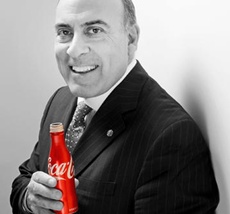
Muhtar Kent, president & CEO, Coca ColaIn what would have been the first overseas takeover of a Chinese company and Coca-Cola's biggest acquisition in China, the Chinese authorities squashed the deal, not wanting to lose an iconic brand to a foreign company.

It was also the first major test for China's commerce ministry since it made its anti-monopoly laws more stringent last August, a month after it prevented the second largest private equity firm, the US-based Carlyle Group from acquiring China's largest construction equipment maker, Xugong, in July (See: China vetoes Carlyle's acquisition of machinery maker Xugong Group), though the Chinese company had sought Carlyle's backing to expand in the US market. 

With anti-monopoly regulators evaluating the deal since it was announced in early September, (See: Coke pulls-off biggest ever acquisition of Chinese firm with $2.4-billion buy of Huiyuan Juice) it became a political liability for China after Huiyuan's rivals, various protectionist groups and media started lobbying the ministry of commerce to reject the deal saying that Coca Cola would eventually have a stranglehold in the Chinese beverage market.

The rejection came despite Muhtar Kent, president and CEO of Coca Cola, visitng Beijing last week to reassure Chinese officials that it would create more jobs and protect Chinese farmers who supply raw materials to Huiyuan Juice Co as well as increase its investment in China.

Huiyuan's founders and major shareholders had endorsed the sale as a way for the company to improve product development and marketing.

Huiyuan, is China's largest juice maker in terms of sales value with an about 32.6 per cent of that market by the end of the year, a lower share compared with 44 per cent at the end of June 2008.

It was founded in 1992 and exports beverage products to 30 countries, including the US and Japan.

This new additional investment would have been over and above the $2 billion investment that it announced early this month in China over a period of three years on new plants and distribution infrastructure, sales and marketing and R&D. (See: Cola war heats up in China with Coca-Cola's new $2-billion investment plans)

The US government has also made Chinese acquisitions difficult on its home ground, where to a certain extent, the Chinese have also retaliated, as Morgan Stanley and Citigroup are still waiting for their joint ventures to be approved although it has applied nearly a year back.

But European banks have not faced the same problems as the Chinese regulators have approved the license applications of Credit Lyonnais, Deutsche bank and Credit Suisse in recent months.

In a statement released today afternoon in Beijing, the commerce ministry said that if Coca-Cola were allowed to acquire the juice maker, China Huiyuan Juice Group Ltd, the combined company's market power could "squeeze out" smaller players in China's domestic beverage industry and lead to "higher prices" for consumers.

There is no way for Coca-Cola to appeal the decision, according to commerce ministry official Chen Rongkai.

The rejection of the deal could give ammunition to China's critics, who argue that Beijing is asking other countries to open their markets to foreign investment as it maintains significant limits at home.

Chinese officials, including Premier Wen Jiabao, have been warning vigorously in recent months against protectionist moves in the US and other countries amid the global economic crisis.

The American Chamber of Commerce in China declined to comment on the ruling, while the European Union Chamber of Commerce in the country said it hopes "the reasons behind the decision to reject the bid will be made publicly available in the near future."

The ministry said that it had attempted to negotiate with Coca-Cola for a more limited deal that would mitigate what it considered the anti-competitive effects of the acquisition. But the ministry said that Coca-Cola's response didn't go far enough to address its concerns. The ministry did not elaborate on what types of restrictions it had sought.

Coca-Cola's offer for Huiyuan, announced on 3 September, ignited an outcry by nationalists who objected to the foreign takeover of a major Chinese brand. Rival juice producers complained it would give Coca-Cola too much dominance in China's beverage market.

The rejection of Coca-Cola's bid came despite its announcement this month that it would invest $2 billion in China over the next three years. Some observers took that as an attempt to build Chinese support for the Huiyuan takeover.

China is a top destination for foreign investment but the purchase of existing companies is still unusual and politically sensitive. After Atlanta-based Coca-Cola announced its bid, comments posted on Chinese Web sites called its founder, Zhu Xinli, a traitor. Huiyuan defended the deal as being in the best interests of the Chinese economy.

Beijing issued rules in 2006 that bar foreign ownership of companies in power generation, weapons and other industries, but fruit juice makers are not mentioned.


 search domain-b
  go
 
China trips Coke on Huiyuan Juice acquisition