|
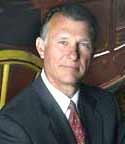
How does the hyena steal a kill from the cheetah in the African Sahara? Don't go that far; just ask Richard Kovacevich, the shrewd Wells Fargo chairman, as to how he managed to seal the Wachovia deal from right under the nose of Citibank. (See: Citi to acquire Wachovia assets in a US government-backed rescue) Wells Fargo stunned Citi and the industry when it announced on Friday that it had signed a deal to buy Wachovia for more than $16 billion (See: Wells Fargo edges Citi to grab Wachovia for $15.1 billion) , just four days after Citi agreed to acquire Wachovia's banking operations for a little over $2 billion, a deal brokered and backed by the US government. Till late on Thursday night Citi's top executives were working out the operational details and integration plans with Wachovia executives and had no inkling to the backdoor negotiations that Wachovia was having with Wells Fargo simultaneously. Top Citi executives must have been pleased with the outcome of the cheap acquisition since Citi's focus had always been on overseas businesses where it expanded and earned good returns. With the acquisition of Wells Fargo Citi would have been able up to expand and its deposit base in the US. So pleased were they at the Citi-Wachovia deal, that Citi released newspaper advertisements all across the US, boasting about its deal with Wachovia. "Citbank is honoured to enter into a partnership with Wachovia, together we will be part of the largest financial services company in the world," the ad proclaimed. Vikram Pandit, the CEO of "Citi that never sleeps" was roused from sleep at 2:15 by Wachovia CEO Robert Steel, who informed him that the deal was off as Wells Fargo had agreed to buy Wachovia, lock-stock and barrel for more than $16 billion. Pandit is reported to have called up Citi's lawyers and held an emergency meeting along with his top executives at the law offices of Davis Polk & Wardwell chalking out its future legal strategy. Early next morning Citi issued a statement saying, "Wachovia's agreement to a transaction with Wells Fargo is in clear breach of an 'exclusivity agreement' between Citi and Wachovia. In addition, Wells Fargo's conduct constitutes tortuous interference with the 'exclusivity agreement'." The 'exclusivity agreement' prevents Wachovia from discussing an acquisition with other parties, does not expire until Monday, 6 October, setting off a potential legal battle over Wachovia. Wells Fargo has come a long way from being a stagecoach company transporting gold in the rich Midwest during the 1852 to today's $609-billion asset bank under the astute banker, Richard Kovacevich, Citi's CEO in the '80s who coined the famous Citi advertising tagline: ''Citi that never sleeps.'' Citi has been providing liquidity support to Wachovia Bank during this week, ever since it announced a deal between the two banks on Monday. Both Wells Fargo and Wachovia insisted their deal, worth $16 billion, was better for shareholders and taxpayers than the $2 billion offered by Citi. Wells Fargo, which had initially bid but walked away from the Wachovia deal, must have reversed its stand as the US Internal Revenue Service on Tuesday restored tax breaks for banks that take big losses on their books through bad loans inherited from acquisitions. This rule had earlier proved an obstacle for any bank acquiring Wachovia, which had about $74 billion in losses. The IRS move potentially increases buyer's ability to realise tax benefits from bank acquisitions. The Federal Deposit Insurance Corporation, which had brokered the Citi deal, said that until a review of Wells Fargo's offer is completed, the agency would stand behind the Citigroup deal. Other bank regulators said they had not evaluated Wells Fargo's offer. Analysts feel that Citi ought to walk away from Wachovia as the Wells Fargo deal was more attractive as it did not require government support or the taxpayer's money. Pandit feels Citi is in a strong position legally, as lawyers have citied a landmark legal battle between Pennzoil and Texaco in the 1980s, when Pennzoil had arrived at an agreement in principle in 1984 to acquire Getty Oil Co, which Texaco tried to acquire Getty, prompting Pennzoil to go to court and block the merger. Pennzoil was awarded $10.5 billion, with the ruling also being upheld by the US Supreme Court. In a conference call on Friday morning, Kovacevich told investors that he was confident the deal would go through, saying, ''it was a solid deal and Wells Fargo was "not aware of any merger agreements" that had been consummated at the time. He also maintained that the transaction has been done appropriately and would be consummated. Commentators say Citi made a big mistake as its agreement did not include a break-up fee, which would have made it more expensive for Wachovia to break off the deal with Citi, and if it were serious on going to court, it would have filed a temporary restraining order by now. Many shareholders who sold their stock, which valued Wachovia shares at $1 each because of the proposed deal with Citigroup, are an angry lot, as the Wells Fargo deal values is ofeering $7 each. Wells Fargo stands to benefit the most out of this deal as its business does not overlap with Wachovia.
|