Africa's first zero-emission electric 6-seater to debut at Paris Motor Show
03 October 2008
Privately-owned Cape Town-based automotive firm Optimal Energy will showcase Africa's first all-electric, zero-emission vehicle at the annual Paris Motor Show starting tomorow.
Named after British researcher British physicist James Prescott Joule, known for his research in electricity and thermodynamics, the eco-friendly six-seater Joule has been dsigned by South African born automotive designer, Keith Helfet, who has styled the interiors and the exterior of the car.
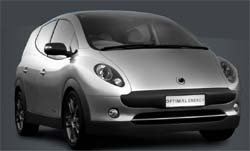 Helfet has a long and illustrious history as chief stylist at Jaguar and was responsible for such iconic designs as the XJ220, the XK180 and the F-Type.
''Keith was serendipitously introduced to Optimal Energy while purchasing coastal property in South Africa and was immediately captivated by our vision," says Kobus Meiring, CEO of Optimal Energy. "Optimal Energy was searching for a world class designer, the fact that Keith is South African born and has strong South African roots matched our criteria perfectly,'' says Meiring.
Meiring says, ''The world's finite energy sources are being used inefficiently and urban transport plays a major role in energy wastage and climate changing pollution. Joule is Optimal Energy's solution to change that. We have capitalised on the opportunity presented by the exponential increase in oil costs and the dramatic improvement in battery price, life and performance."
Joule's chassis has been designed to accommodate two large-cell lithium ion battery packs which employ chemistry similar to that used in mobile phones and laptop computers. This chemistry is inherently safe; lithium is found in many medicinal applications and the batteries do not contain any heavy metals.
